Interior ant activity inside domestic spaces typically involves odorous house ants or pavement ants searching for moisture and food carbohydrates. In Baltimore, historic housing stock presents unique structural…
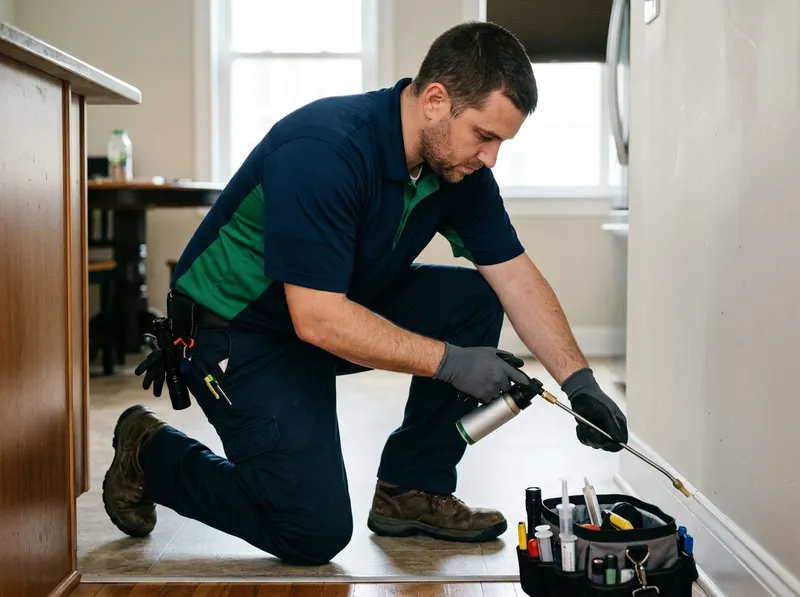
Interior ant activity inside domestic spaces typically involves odorous house ants or pavement ants searching for moisture and food carbohydrates. In Baltimore, historic housing stock presents unique structural vulnerabilities. In older brick rowhouses throughout Mount Vernon, Federal Hill, and Fells Point, century-old mortar joints, shared party walls, and subfloor gaps behind original baseboards allow small colonies to move between properties unnoticed. Detached dwellings in Roland Park and porch-front homes in Charles Village often face pressure from exterior mulch beds and rooflines abutting mature tree canopies, directing foragers into second-story bathrooms and kitchen sinks.
Effective eradication prioritizes structural containment over broad repellent sprays. Pyrethroid-based contact sprays frequently trigger budding, a biological defense where an ant colony splits into multiple satellite nests behind plaster walls or lath framework, worsening the presence in living areas. Targeted eradication relies on slow-acting, non-repellent transfer baits combined with focused void applications. Foraging workers ingest the bait matrix and carry it directly back to the queens and brood within hidden structural cavities, eliminating the source without dispersing pests into adjacent bedrooms or food preparation counters.
The domestic protocol proceeds through three measurable steps:
1. Identification of active foraging trails along kitchen counters, radiator pipes, plumbing penetrations, and window jambs.
2. Placement of enclosed, child- and pet-resistant non-repellent bait stations directly alongside worker scent pathways.
3. Structural micro-dusting or targeted liquid barrier placement inside unsealed pipe chases, stone basement ledges, and floor cracks.
For households with minor, isolated exterior incursions, single-point baiting may provide temporary suppression. However, when worker lines persist along drywall seams, behind stoves, or through hardwood floor gaps, full interior eradication is the proper choice to protect domestic food surfaces and eliminate hidden void colonies permanently.
Every job gets a firm, written price after a free on-site visit.
Tell us about your interior nuisance ant eradication job in Baltimore and we'll send a clear, written quote, usually the same day.
 Zandora Pest Relief